
Graphic design has become a popular skill among students and working professionals in India. Businesses of every size need social media creatives, brand identities and marketing material, and that demand has pushed many beginners to look for a structured way to learn.
The first big decision is usually the format. Should you learn from home or attend classes at an institute? Comparing an online vs offline graphic design course can feel confusing because both teach the same tools and principles, yet the learning experience is quite different. This guide compares flexibility, feedback, practical work, discipline and career preparation so you can choose the format that suits you.
What Is an Online Graphic Design Course?
Online learning delivers lessons over the internet through recorded videos, live classes or a mix of both. You study from home, access materials on a learning platform and submit assignments digitally.
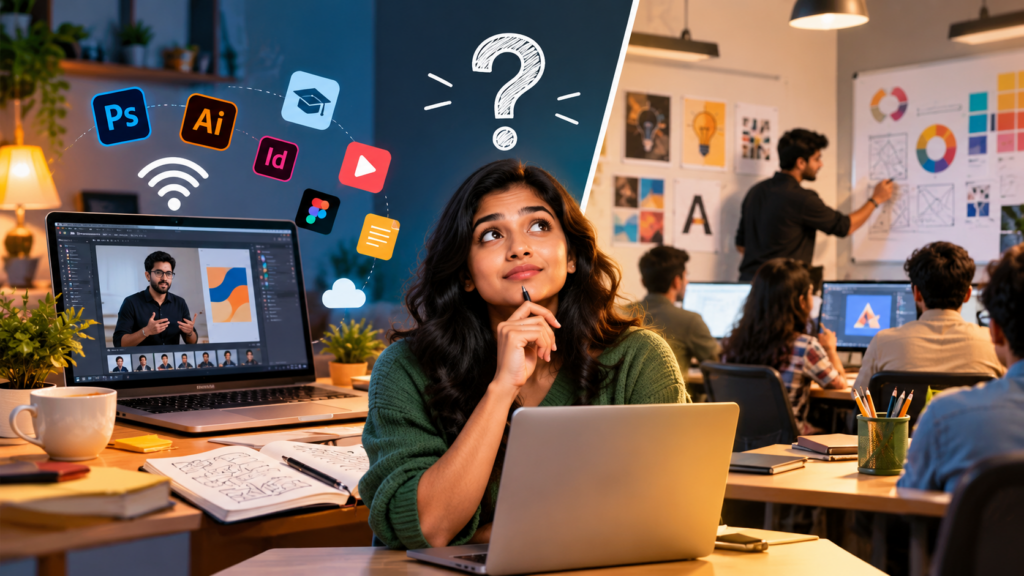
- Learn from any location with a stable connection
- Rewatch recorded lessons for revision
- Move at your own pace in self-paced programs
- Get instructor support through live sessions, chats or assignment reviews
What Is Offline Graphic Design Training?
Classroom graphic design training takes place in a physical lab with an instructor present. Students follow fixed batch timings and practise on institute systems.
- Face-to-face interaction with instructors
- Live demonstrations and supervised practice
- Structured daily or weekly schedules
- Peer interaction and group critiques
Online vs Offline Graphic Design Course: Key Differences
Flexibility and Schedule
Online learning fits around jobs, college and family commitments. Offline classes require you to attend at set times, which builds routine but offers less freedom.
Practical Learning
Design improves through hands-on work. Classroom sessions usually include supervised practice time. Online learners must practise independently between lessons, so progress depends on personal effort.
Learning Pace
Self-paced online courses let you repeat difficult topics. Classroom batches move at a shared pace, which helps some learners stay steady but may feel too fast or slow for others.
Self-Discipline and Accountability
Online learning requires strong self-motivation. Offline training provides external accountability through attendance, deadlines and classmates working alongside you.
Accessibility and Technical Needs
Online courses open doors for learners in smaller towns, but you need a capable computer and reliable internet. Offline institutes usually provide lab systems, which helps beginners who have not yet invested in equipment.
Networking
Classrooms make it easy to build friendships and professional connections. Online learners can network through community groups, though it takes more deliberate effort.
Which Learning Format Gives Better Feedback?
Feedback matters because beginners often cannot spot their own mistakes in spacing, alignment or colour choices.
In a classroom, an instructor can correct you while you work. Online programs can offer feedback through live screen-sharing critiques, written assignment reviews, recorded walkthroughs and peer discussions. Response time varies from course to course.
So, which gives better feedback? Neither format wins by default. Batch size, instructor availability and how often work is reviewed matter far more. Before enrolling at any institute, including Dotin Creative Academy, ask how assignments are reviewed and how much one-to-one guidance you will receive.
Self-Learning vs Institute-Based Learning
Free tutorials can teach software tools, and self-learning works for highly disciplined people. The challenge is structure. Beginners often skip fundamentals like typography, hierarchy and grids.
The self-learning vs institute comparison usually comes down to:
- Accountability: Institutes set deadlines; self-learners must create their own.
- Guidance: Instructors answer your specific doubts.
- Portfolio building: Structured courses guide you through presentable projects.
Who Should Choose Online Learning?
Online learning may suit:
- Working professionals with busy schedules
- College students studying alongside a degree
- Learners outside major cities
- People comfortable with computers and independent study
Watch out for a lack of routine, limited interaction in some recorded courses and delayed feedback. When comparing options for an online graphic design course in Kerala, check whether live doubt sessions are included.
Who Should Choose Classroom Training?
Classroom learning may suit:
- Complete beginners who need direct guidance
- Learners who prefer fixed schedules
- People who learn best through live demonstrations
- Students who need external accountability
Limitations include travel time, fixed timings and fewer quality options in some locations.
What About Hybrid Courses?
Hybrid courses combine online theory with in-person practical sessions and critiques. They can offer flexible revision along with face-to-face guidance. They still require you to reach a physical centre regularly, and their value depends on how well both parts are planned.
How Should Beginners Choose?
Consider these factors honestly:
- Your current schedule and commitments
- How much instructor guidance you need
- Your location and commute
- Total budget, including software and equipment
- Access to a suitable computer
- Your level of self-discipline
- Career goals and portfolio needs
Online vs Offline Graphic Design Course: Which One Should You Choose?
There is no universal winner. Online learning suits self-motivated learners who need flexibility. Offline learning suits beginners who want direct guidance and structure. Hybrid learning suits those who want a balance of both.
What matters most is course quality. Look at the curriculum, instructor experience, feedback frequency, practical assignments, software training and portfolio support. If you are considering Dotin Creative Academy or any other institute, compare these points carefully before deciding on a format.
Frequently Asked Questions
Is an online graphic design course good for beginners?
Yes, if it covers fundamentals and includes regular feedback. It works best for learners who can study consistently on their own.
Is classroom training better than online learning?
Not always. Classroom training offers instant help and structure, while online learning offers flexibility. The right choice depends on your needs.
Can working professionals learn graphic design online?
Yes. Recorded lessons combined with scheduled live sessions allow professionals to learn without leaving their jobs.
Are hybrid graphic design courses useful?
They can be, especially for learners who want flexible theory along with in-person practical work.
Can I learn graphic design without an institute?
Yes, but self-learning needs strong discipline, a clear roadmap and a reliable source of feedback.
Conclusion
Online learning offers flexibility and accessibility, while offline learning provides direct interaction and structure. Hybrid courses combine elements of both. The best choice depends on your schedule, learning style, goals and need for support. Whichever format you choose, prioritise curriculum quality, instructor feedback, practical assignments, software training and portfolio development.


Pingback: Best UI/UX Design Course in Kochi | Dotin Creative Academy